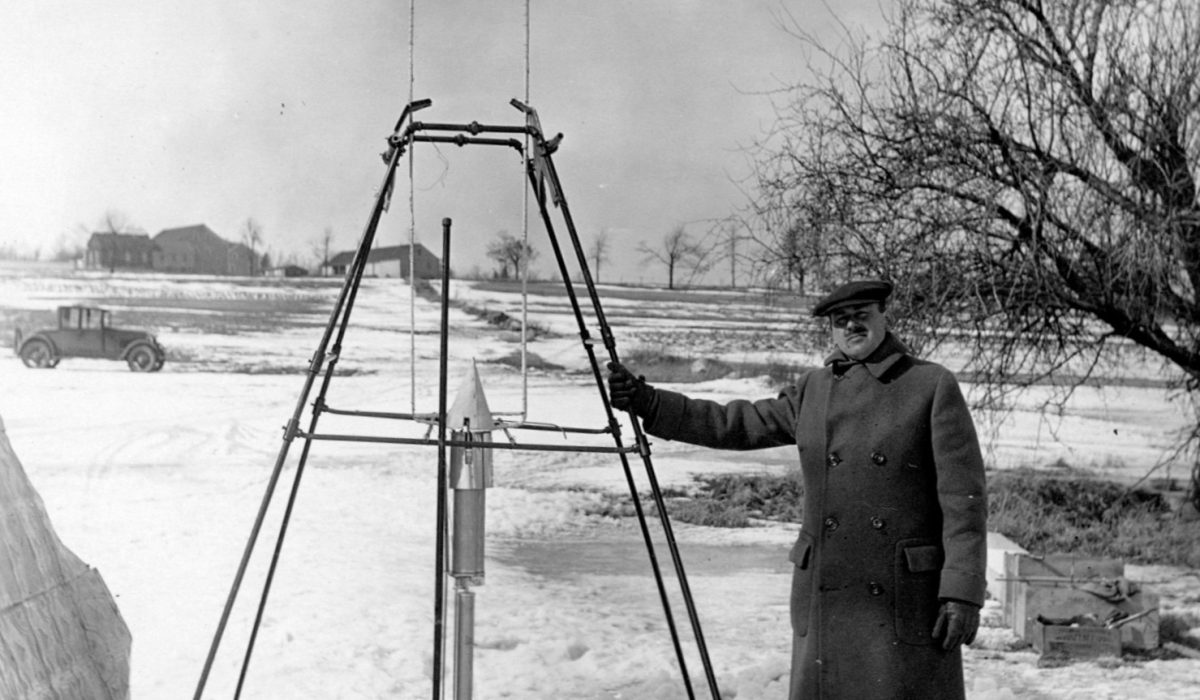
On a cold winter day a hundred years ago, a groundbreaking journey began that would shape the future of space exploration. NASA is marking 100 years since this pivotal moment in modern rocketry, reflecting on the technological advancements and scientific achievements that emerged over the past century.
The Origins of Modern Rocketry
A century ago, early rocket experiments were conducted by pioneering individuals whose work laid the foundation for contemporary aerospace engineering. These efforts included both theoretical studies and practical tests aimed at understanding propulsion techniques, guidance, and stability.
The collaboration and innovation during this time were instrumental in transforming rocketry from rudimentary demonstrations into viable technologies capable of supporting space exploration. The local experiments and small-scale projects gradually evolved into more sophisticated programs.
Key Milestones in Rocket Development
Throughout the 20th century, numerous advancements propelled rocketry forward. Early liquid-fueled rockets demonstrated greater control and efficiency compared to earlier solid-fuel models. The mid-century space race further accelerated development as government agencies and research institutions increased funding and focus.
Pioneering launches, including suborbital and orbital flights, marked significant achievements that culminated in manned space missions. These milestones not only advanced technology but also expanded humanity’s understanding of physics and engineering applied beyond Earth’s atmosphere.
NASA’s Role in Advancing Rocket Technology
Since its establishment, NASA has played a critical role in continuing the legacy of innovation in rocketry. The agency has led numerous projects focusing on propulsion systems, materials science, and aerodynamics to enhance rocket performance and reliability.
Programs like the Apollo missions, Space Shuttle, and ongoing development of Mars exploration vehicles serve as testaments to NASA’s commitment to pushing the boundaries of what rockets can achieve. Their research has enabled new frontiers in both manned and unmanned spaceflight.
The Impact on Space Exploration and Beyond
The development of modern rockets has revolutionized humanity’s ability to explore space. Satellites launched by advanced rockets have transformed communication, weather forecasting, and Earth observation. Interplanetary missions have expanded scientific knowledge about our solar system and beyond.
Moreover, rocket technology has found applications in defense, commercial satellite deployment, and emerging fields like space tourism. The ongoing innovations promise to further democratize access to space and create new opportunities in science and industry.
Looking Ahead: The Future of Rocketry
As NASA celebrates 100 years of rocketry, attention turns to the future. Developments such as reusable launch vehicles, green propulsion technologies, and autonomous flight systems are poised to redefine space travel. International partnerships and private industry participation are also shaping a new era.
By continuing to build on the legacy of the past century, NASA and its collaborators aim to achieve ambitious goals including lunar bases, Mars colonization, and exploring deep space. The next 100 years may witness equally transformative advancements in rocket science.