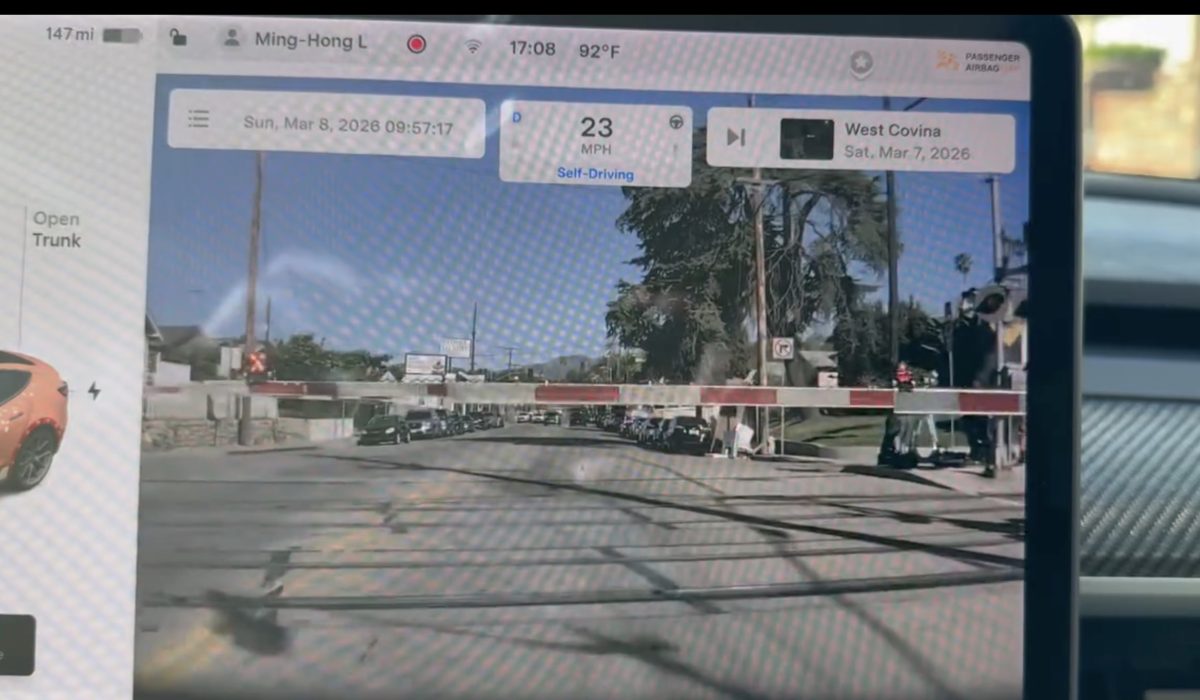
A concerning video has surfaced showing a Tesla Model 3 equipped with Full Self-Driving (FSD) technology driving directly through railroad crossing barriers in Los Angeles. The clip highlights potential safety issues with Tesla’s autonomous driving system just as regulatory scrutiny intensifies.
Details of the Viral Incident
The video depicts the Tesla vehicle approaching railroad tracks with the crossing barriers lowered, signaling an oncoming train or a safety perimeter. Instead of stopping, the Model 3 continues driving through the lowered barriers without hesitation, apparently failing to detect or respond to the physical warning.
This incident has sparked wide attention on social media, raising concerns about the reliability and real-world safety of Tesla’s FSD technology when confronted with critical infrastructure such as railroad crossings.
Regulatory Context and Investigation
The timing of the video’s release coincides with the National Highway Traffic Safety Administration (NHTSA) deadline for Tesla to submit important data from its ongoing investigation into multiple FSD-related traffic violations, including failures involving railroad crossing recognition.
This probe aims to evaluate Tesla’s autonomous system responses to various traffic scenarios that pose safety risks. The viral video appears to be a significant piece of evidence in understanding how Tesla’s software handles crucial real-world driving challenges.
Concerns About Full Self-Driving Capabilities
Full Self-Driving remains a beta-level software feature, requiring drivers to maintain attention and readiness to take control at any moment. Incidents like this suggest that even with attentive drivers, the system itself may not reliably detect critical hazards such as railroad gates.
Experts caution that autonomous driving technology is still evolving, and current limitations must be addressed to prevent potential accidents or violations of traffic laws related to railroad crossings and other infrastructure.
Tesla’s Response and Industry Impact
Tesla has not yet publicly commented on this specific incident. However, the automaker has consistently defended its FSD system, emphasizing ongoing software updates aimed at improving safety and detection capabilities.
As public and regulatory scrutiny grows, Tesla and other automakers will face increased pressure to demonstrate that their autonomous driving technologies can perform safely in complex traffic environments, including railroad crossings.
Future Outlook for Autonomous Driving Safety
This viral video underscores the critical need for thorough testing and stringent safety standards for autonomous driving systems. Continued development, oversight, and transparency will be essential to build confidence among consumers and regulators alike.
Moving forward, collaboration between technology developers, regulators, and industry stakeholders will be crucial to ensure advancements in autonomous driving contribute positively to road safety without compromising public trust.