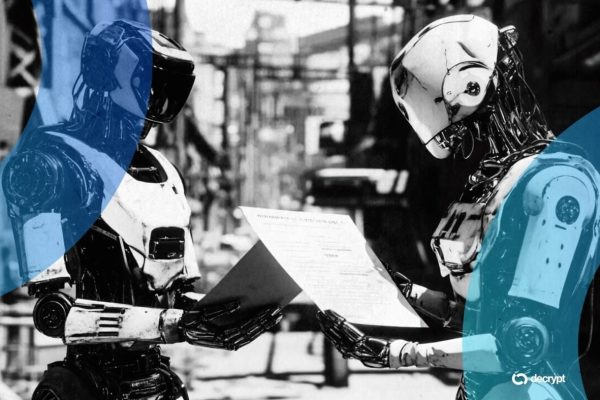

Artificial intelligence continues to provoke debate over whether its rapid development signals a market bubble or a fundamental technological shift. While investors and analysts draw parallels to past tech booms, experts argue that AI’s unique capabilities challenge existing frameworks for understanding innovation.
Why Markets Keep Overshooting
Historically, major technological shifts trigger exaggerated expectations and high-profile failures that give the impression of bubbles. The dot-com era, mobile technology surge, and cryptocurrency craze all followed similar trajectories characterized by inflated valuations and subsequent corrections.
However, many market valuation models struggle with disruptive technologies because they assume gradual, incremental growth. These tools typically rely on stable forecasts and comparable companies within well-established categories, which do not apply when a market is fundamentally new or discontinuous.
Consequently, capital allocation often becomes erratic. What appears as overshooting by the market is, in reality, the uncertainty and difficulty involved in pricing innovations that transform industries over decades rather than quarters. This difficulty reveals the inadequacy of traditional financial models in dealing with profound technological change.
The Category Error We Keep Making
When faced with something novel, people tend to draw analogies to familiar technologies such as electricity, computers, the internet, or mobile devices. These comparisons offer comfort but overlook critical differences.
Unlike previous technologies that enhanced human capability without replacing core cognitive functions, AI performs cognitive tasks itself. This shift challenges long-held assumptions about the indispensability of human expertise and the nature of work. For example, AI tools can now execute tasks that once required years of human experience in moments, fundamentally changing job roles and workflows.
This dynamic compounding improvement of AI tools—where they learn and become more capable with use—is unprecedented and not captured by prior analogies. It suggests that the progression of AI is nonlinear and defies traditional expectations, making historical comparisons inadequate.
The Skeptics Are Right About the Hype, Wrong About What It Means
Critics who call AI a bubble often highlight overhyped expectations and potential failures among startups. While some of these concerns are valid—such as slow adoption or business failures—they do not negate the transformative potential of AI as the first technology to perform knowledge work autonomously.
Even if widespread AI-enabled business models take years to mature, the fundamental ability of AI to automate and augment cognitive tasks remains revolutionary. This dual reality—of hype and real change coexisting—is similar to past technology booms where excitement was accompanied by significant industry transformation despite setbacks.
As a result, business leaders are increasingly focused on identifying specific workflows that AI can automate profitably, especially those involving repetitive expertise and serving as bottlenecks to higher-value work. This pragmatic approach moves beyond theoretical debate toward practical application.
Where Humans Still Matter (For Now)
Although AI excels in recognizing patterns and generating analysis, it cannot yet reliably interpret the strategic significance of data or make nuanced judgments under uncertainty. Human decision-making remains essential, particularly in high-stakes and complex contexts.
With AI automating routine cognitive work, the critical constraint shifts from cognitive capacity to judgment: deciding what questions to ask and which problems to prioritize. This shift presents a new challenge for organizations adapting to AI-driven transformation.
Successful companies will focus on integrating AI into workflows that solve real-world problems while preserving human oversight where it matters most. This balance reflects the current state of AI-human collaboration and underscores the importance of thoughtful implementation.
This Time Is Actually Different
Despite inevitable short-term disappointments and failures, AI is poised to reshape knowledge-based industries over the coming decade. Unlike previous technologies, it scales intelligence itself—a constraint historically limiting human innovation.
As the initial market turbulence settles, the lasting impact of AI will become evident through the organizations that embed it effectively in their operations. The eventual normalization of AI-driven knowledge work will transform industries and redefine competitive advantage.
Looking back, today’s debates over AI valuations will resemble past skepticism during early internet adoption. The true winners will be those who focused on continuous innovation and practical value creation amidst uncertainty.