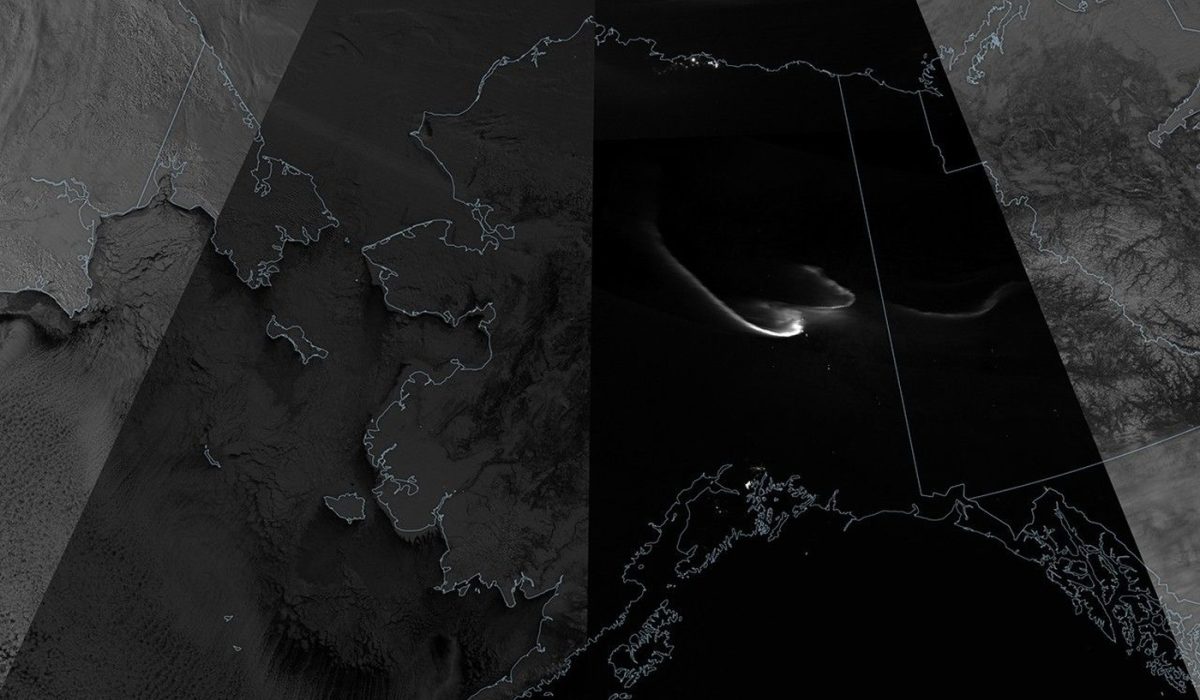
A recent series of nighttime satellite images has provided a unique perspective on the variations in moonlight that reach Earth during a total lunar eclipse. These observations deepen our understanding of how Earth’s shadow alters the illumination of the Moon, with implications for both astronomy and atmospheric science.
Overview of the Total Lunar Eclipse Phenomenon
A total lunar eclipse occurs when the Earth comes directly between the Sun and the Moon, casting a shadow that darkens the Moon’s surface. Unlike a solar eclipse, where the Sun is obscured, a lunar eclipse allows the Moon to pass through Earth’s shadow, sometimes giving it a reddish tint known as a “blood moon.”
The changing illumination during the eclipse is influenced by Earth’s atmosphere, which bends and filters sunlight before it reaches the lunar surface. This phenomenon results in varying degrees of brightness and color seen from Earth and captured by satellites.
Satellite Imaging Techniques During the Eclipse
The nighttime images were captured using specialized Earth-observing satellites equipped to detect faint sources of light. These satellites track the Moon’s brightness from different vantage points, revealing how the intensity and quality of moonlight change during the progression of the eclipse.
By using multispectral imaging, scientists were able to measure variations in light intensity and spectral qualities, providing data that can improve models of Earth’s atmospheric composition and its effect on light transmission.
Findings on Light Variation and Shadow Gradients
The images illustrate gradual changes in the moonlight’s brightness as the lunar surface transitions from partial to total shadow. During the total phase, moonlight is significantly reduced but not entirely absent due to Earth’s atmosphere refracting sunlight.
The satellite data reveal subtle gradients of color and brightness across the Moon’s surface, linked to the Earth’s atmospheric conditions at the time of the eclipse. These patterns help scientists understand the impact of atmospheric particles and weather patterns on light diffusion.
Implications for Atmospheric and Lunar Studies
The observed variations in moonlight provide valuable information about Earth’s atmosphere, including the presence of aerosols and dust particles that affect light transmission. This insight can aid climate researchers in monitoring atmospheric composition changes.
In addition, these findings have relevance for lunar science. Understanding the precise illumination conditions during eclipses assists in calibrating observations of the Moon’s surface properties and can improve interpretations of past lunar missions’ data.
Future Directions in Lunar Eclipse Research
Continued satellite observations of future lunar eclipses are expected to refine the characterization of Earth’s atmospheric effects on moonlight. Enhanced imaging technology could enable more detailed studies of transient atmospheric events impacting light transmission during eclipses.
Researchers also hope to combine satellite data with ground-based observations to build comprehensive models linking atmospheric conditions with observed changes in eclipse luminosity and color, advancing both atmospheric science and lunar exploration.