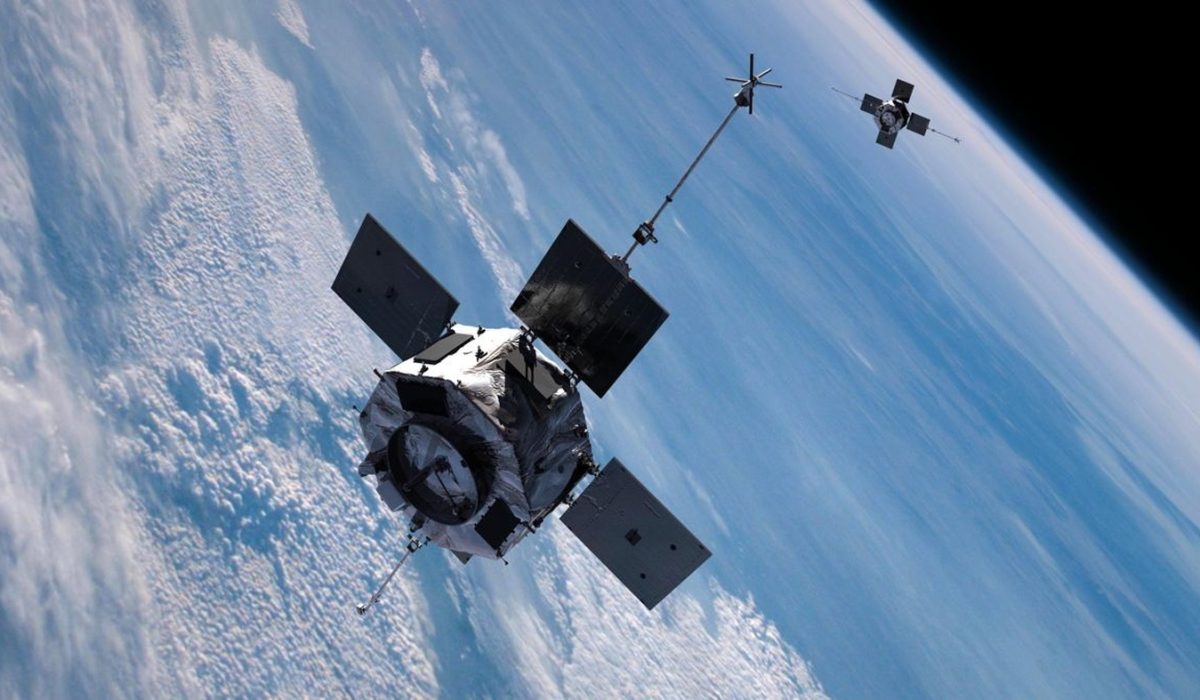
NASA’s Van Allen Probe A, a scientific satellite that has been orbiting Earth for nearly 14 years, is expected to reenter the atmosphere and crash on March 10, according to estimates from the U.S. Space Force. Despite its significant size, experts say there is minimal risk to people on the ground.
Background of the Van Allen Probe A Mission
The Van Allen Probes were launched in 2012 to study the radiation belts surrounding Earth, providing valuable data on space weather and how charged particles behave in near-Earth space. The two probes, Van Allen Probe A and Van Allen Probe B, contributed to understanding the dynamics inside the belts, which affect satellite operations and astronaut safety.
Van Allen Probe A has operated successfully for almost 14 years, far exceeding its planned mission duration. Its instruments gathered crucial scientific observations that improved space environment forecasting and navigational systems.
Details of the Satellite’s Expected Reentry
The satellite weighs about 1,300 pounds (roughly 590 kilograms) and is expected to reenter the Earth’s atmosphere on March 10. The exact location where debris might fall remains uncertain, but experts predict most of the spacecraft will burn up upon reentry due to atmospheric friction.
The U.S. Space Force is closely monitoring the satellite’s trajectory to provide updated forecasts and ensure public safety. There is no current indication of significant risk to populated areas.
Safety Measures and Risk Assessment
When satellites reenter Earth’s atmosphere, the majority of debris disintegrates from intense heat generated during descent. Only the most heat-resistant components typically reach the surface, and even then, the risk of harm is extremely low due to the vast areas of ocean and unpopulated regions on Earth.
NASA and the Space Force have protocols in place to track such events and inform the public as necessary. Authorities encourage individuals to remain informed but reassure that there is no cause for alarm.
Scientific and Technological Legacy
The Van Allen Probes have left a lasting impact on space science by revealing the complex behavior of Earth’s radiation belts. Understanding these belts aids satellite design and mission planning, helping to safeguard modern communication and navigation systems from space weather disruptions.
Even as the Van Allen Probe A concludes its operational journey, the data it collected will continue to support research and technological advancements in space weather monitoring for years to come.
What Comes Next for NASA’s Space Missions?
NASA continues to develop and launch new missions aimed at exploring space and protecting Earth’s orbital environment. As older satellites complete their missions and safely reenter, next-generation spacecraft are designed with improved capabilities for studying the Sun-Earth system and beyond.
The ongoing commitment to space research ensures that scientists and the public benefit from enhanced knowledge of space phenomena and the ability to mitigate risks associated with space operations.