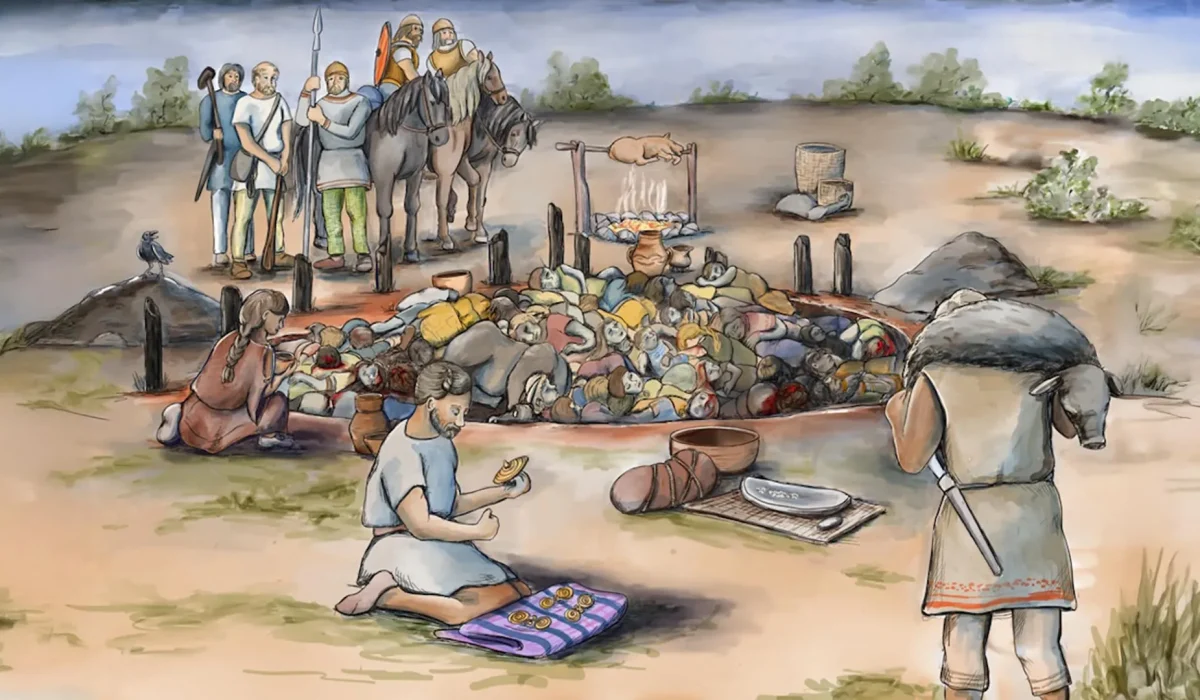
Archaeologists have uncovered a prehistoric mass grave in Serbia containing the remains of more than 77 individuals, predominantly women and children, who were victims of a violent massacre dating back approximately 2,800 years during the Iron Age.
Discovery of the Mass Grave
The mass grave was excavated in a region of modern-day Serbia, revealing a somber scene of deliberate mass killing. The skeletal remains show clear evidence of brutal violence, including blunt force trauma, which points to a coordinated act of aggression rather than random death.
The site provides a stark glimpse into the turmoil and conflict experienced in Iron Age Europe, a period marked by frequent territorial disputes and social upheaval.
Demographics of the Victims
Interestingly, the majority of those found in the grave were women and children, suggesting that the massacre specifically targeted vulnerable members of society. This pattern is unusual as it indicates a strategy aimed at decimating family units or sending a message to rival groups.
The absence of able-bodied adult males raises questions about the nature of the conflict and the intentions of the perpetrators, potentially reflecting the tactics used in warfare or social control during this period.
Genetic Evidence and Community Origins
Genetic analysis conducted on the remains revealed that the victims belonged to different communities rather than a single group, indicating that this event was not an isolated incident of inter-community violence but a larger-scale attack possibly designed to intimidate or destabilize multiple groups.
This finding sheds light on the complex social and political dynamics of the Iron Age in this region, where competing groups might have engaged in brutal violence to assert dominance over territories.
Context of Iron Age Territorial Struggles
The massacre appears to be part of broader conflict and power struggles characteristic of Iron Age Europe. Archaeological and historical records suggest that fierce competition for land and resources often led to violent confrontations.
This discovery adds to the understanding of how prehistoric societies dealt with conflict and may help explain the scale and nature of violence used as tactical measures in territorial disputes.
Implications for Archaeological and Historical Research
The findings challenge previous assumptions about Iron Age warfare and social interactions, highlighting the roles of women and children in these episodes of mass violence. It emphasizes that peaceful coexistence may have been fragile and frequently disrupted by hostile acts.
Future research at this and similar sites could offer further insight into the social structures, migration patterns, and conflict strategies of ancient European populations during the Iron Age.