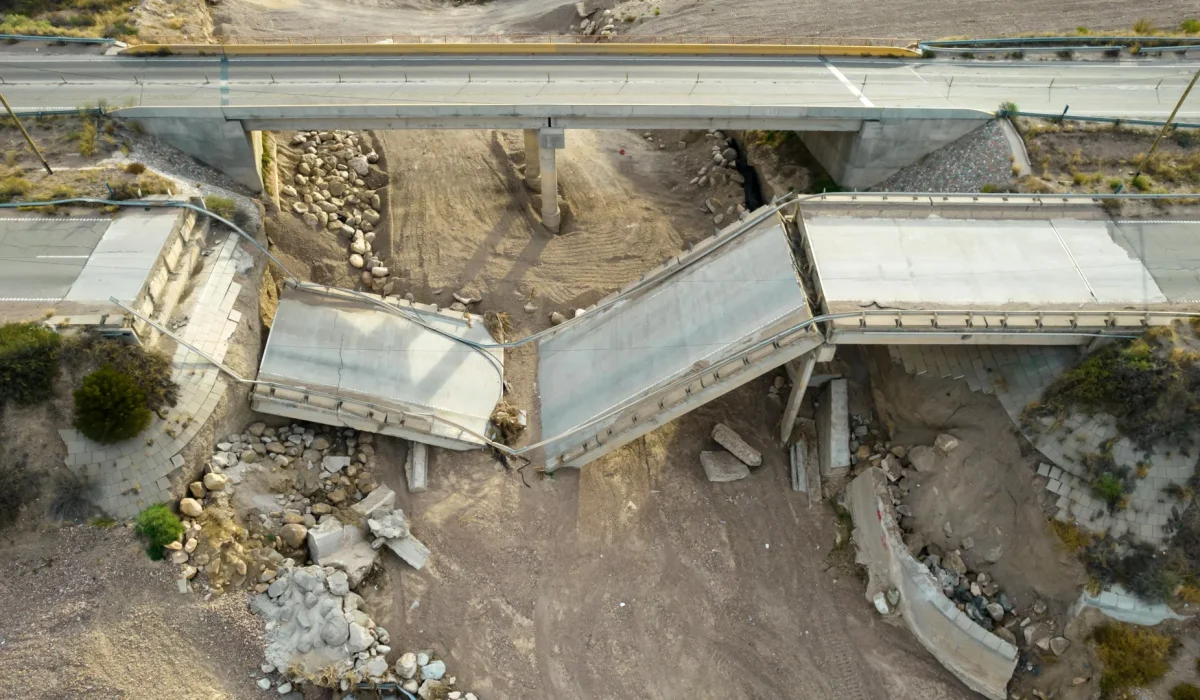
Satellite radar technology is revolutionizing infrastructure monitoring by detecting tiny movements in bridges that indicate potential safety issues. This innovative approach offers a new layer of oversight to assess aging bridges globally, with particular attention to vulnerabilities in North America.
Advancements in Satellite Radar Imaging
Recent developments in radar imaging from satellites allow scientists to measure movements of bridge structures at millimeter-scale precision. This level of detail surpasses traditional inspection methods, enabling earlier detection of structural degradation or instability.
The technology operates by sending radar waves toward the bridge surfaces and analyzing the reflected signals. Changes in the position or shape of the bridge can be identified over time, revealing subtle shifts linked to wear or damage before they become visible on the surface.
Findings on Aging Bridges and Vulnerability
Using satellite data, researchers have identified numerous bridges that exhibit small but persistent movements indicating aging and potential risk. Many of these are located in North America, where infrastructure may be reaching the limits of its intended lifespan.
These discoveries highlight the urgent need for timely intervention to prevent bridge failures. The study suggests that without early warning signs, conventional inspections may not be sufficient to catch deterioration in time, increasing the chance of catastrophic outcomes.
Impact on Bridge Safety and Risk Management
The integration of satellite monitoring has the potential to significantly reduce the number of bridges classified as high-risk. By prioritizing maintenance and repairs based on precise, objective data, authorities can allocate resources more efficiently and improve overall infrastructure safety.
This proactive approach supports better risk management strategies, allowing for preemptive action that may save costs and lives associated with bridge failure and closures.
Benefits for Regions with Limited Monitoring Infrastructure
In many parts of the world, traditional bridge monitoring is minimal due to logistical or financial constraints. Satellite-based methods offer a cost-effective alternative that does not require physical presence or extensive equipment on site.
This advantage is particularly relevant for remote or underserved regions, where early detection of structural problems could prevent accidents and improve public confidence in transportation networks.
Future Prospects and Broader Applications
As satellite technology continues to advance, its applications may expand beyond bridges to other critical infrastructure such as dams, tunnels, and highways. Continuous, remote monitoring has the potential to transform infrastructure management globally.
Collaboration between governments, researchers, and technology providers will be key to integrating satellite radar imagery into standard inspection routines, maximizing safety benefits and infrastructure resilience worldwide.