Capturing the beauty of the night sky requires specialized equipment that can handle low light and extended exposure times. Amateur and professional photographers alike can benefit from understanding the gear that makes stargazing shots clearer and more vibrant.
Cameras Suitable for Night Sky Photography
Choosing the right camera is fundamental for night sky photography. DSLRs and mirrorless cameras with large sensors excel due to their ability to capture more light and detail in dim conditions. Cameras that allow manual control over settings such as exposure, ISO, and aperture are preferred.
Full-frame cameras tend to offer better performance in low light because their larger sensors collect more photons. Additionally, models that have good high ISO capabilities help reduce noise during long exposures, essential for clear star shots.
Optimal Lenses for Shooting the Stars
Wide-angle lenses with a fast aperture (low f-number) are crucial for night sky imaging. They allow photographers to capture large sections of the sky while letting in enough light to illuminate stars and celestial objects.
Lenses with apertures of f/2.8 or faster are ideal, enhancing light intake and enabling shorter exposure times. This helps reduce star trails caused by Earth’s rotation and improves sharpness in images.
Tripods and Stability Equipment
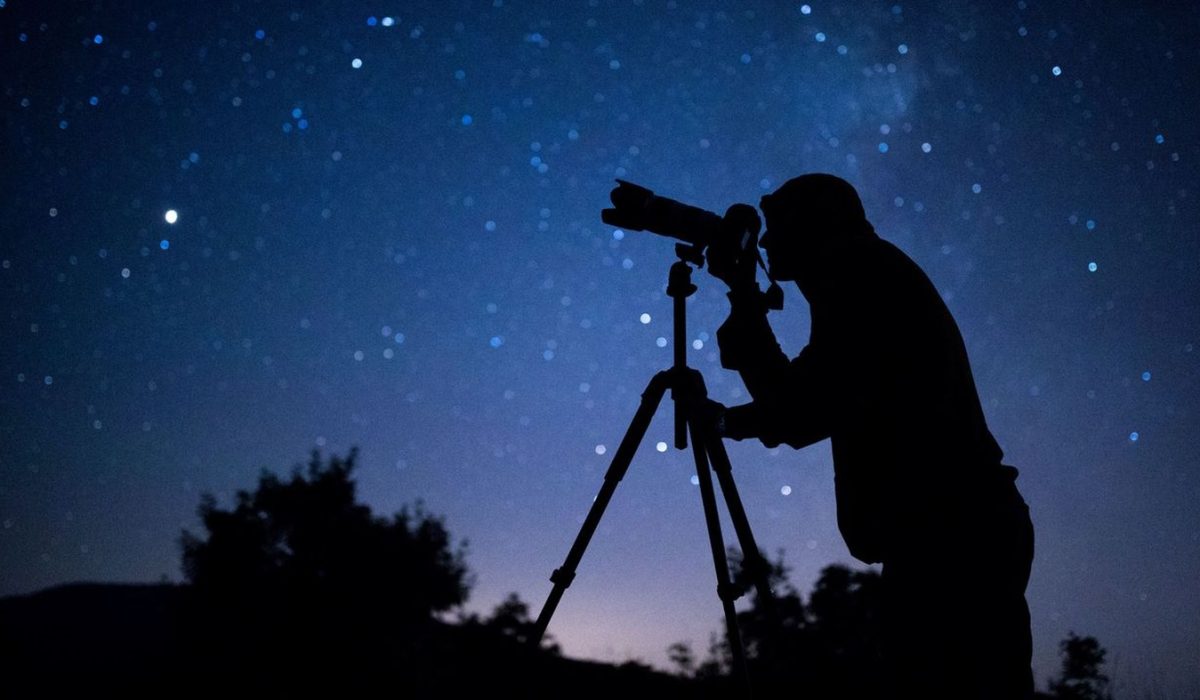
A stable tripod is essential for long exposure photography since even minor vibrations can blur the image. Tripods built from carbon fiber or aluminum provide the necessary sturdiness and portability for outdoor excursions.
Additional stabilization tools such as weighted tripod bags or remote shutter releases are recommended. These reduce shake during exposure and allow for extended shooting without physically touching the camera.
Additional Accessories for Enhanced Results
Remote shutter controls and intervalometers help automate shutter release, minimizing camera movement. These accessories are especially useful for time-lapse sequences or multiple exposures stacked in post-processing.
Using a star tracker can dramatically improve night sky images by counteracting Earth’s rotation, allowing for longer exposures without star trails. Though pricier, this device is valuable for capturing detailed celestial photographs.
Post-processing Software
Editing software plays an important role in refining night sky images. Programs like Adobe Lightroom and Photoshop provide tools to adjust contrast, reduce noise, and enhance colors, bringing out the intricate details of stars and the Milky Way.
Stacking software is also commonly used to combine multiple exposures, improving image clarity and reducing noise further. This step is key for astronomers and photographers aiming to achieve high-quality prints or digital images.