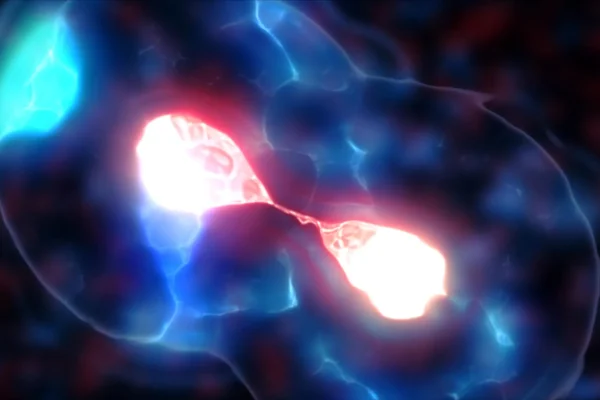

NASA missions have revealed a rare collision between two ultradense stars occurring in a small, previously overlooked galaxy enveloped by a massive gas stream. This surprising discovery challenges prior understandings of stellar events and may shed light on longstanding cosmic mysteries.
Unexpected Site of Stellar Collision
A collaboration of NASA observatories detected the merger of two extremely dense stars within a diminutive galaxy embedded in a large gaseous stream. This environment is markedly different from previously observed locations where such stellar collisions were reported.
The discovery was unexpected because violent events of this nature were thought to take place primarily in larger, more active galaxies. Finding it in this obscure, isolated context suggests new dynamics in star formation and interaction may be at play.
Significance of Ultrahigh-Density Star Mergers
Ultradense stars, such as neutron stars or black holes, are remnants of massive stellar evolution and their mergers produce gravitational waves and high-energy radiation. These events provide crucial insights into fundamental physics and the origins of heavy elements in the universe.
Studying such collisions helps astronomers probe extreme conditions that cannot be replicated on Earth, enhancing our understanding of matter under intense gravitational and magnetic fields.
Implications for Cosmic Mysteries
The newly observed stellar collision could help explain unresolved questions about the sources of certain cosmic phenomena including short gamma-ray bursts and the synthesis of heavy elements like gold and platinum. Identifying these events in new environments broadens the scope of where these processes may occur.
The findings also offer potential clues about how isolated small galaxies contribute to the enrichment of the intergalactic medium and the evolution of cosmic structures over time.
Role of NASA Missions
The discovery was made possible through data collected by a fleet of NASA space telescopes including X-ray, ultraviolet, and optical observatories. Their combined observational capabilities allowed astronomers to characterize the merger across multiple wavelengths.
This multi-mission approach exemplifies NASA’s strategy of using complementary tools to uncover and interpret complex astrophysical phenomena in the universe.
Future Research Directions
This breakthrough prompts further observational campaigns targeting other small or hidden galaxies to identify additional extreme stellar events. Such studies will help determine how common these collisions are and refine theoretical models.
Continued monitoring and deeper surveys will enhance understanding of star system evolution in diverse environments, ultimately advancing knowledge of the dynamic cosmos.