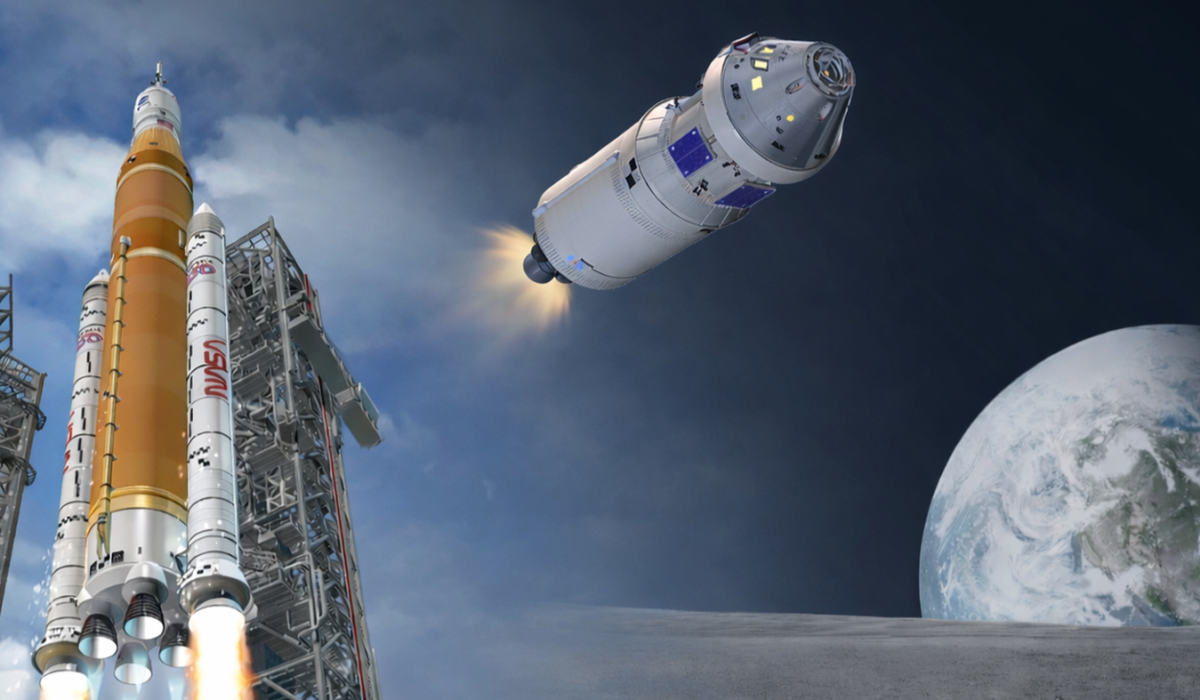
NASA has announced the selection of a new upper stage for its Space Launch System (SLS) rocket, marking a significant change in the Artemis program’s development strategy. This decision aims to standardize the launch vehicle and improve mission flexibility for lunar exploration.
Overview of the New Upper Stage Selection
NASA chose the Exploration Upper Stage (EUS) as the replacement for the previously planned Interim Cryogenic Propulsion Stage (ICPS). The EUS is designed to provide enhanced performance, increasing cargo capacity and enabling more complex lunar missions.
This vehicle change aligns with NASA’s vision to establish a sustainable human presence on the Moon as part of the Artemis program. By adopting the EUS, NASA intends to streamline the manufacturing process and reduce long-term costs.
Implications for the Artemis Program
The Artemis program, which aims to return humans to the Moon and eventually send astronauts to Mars, relies heavily on the capabilities of the SLS rocket. Upgrading to the EUS allows for heavier payloads and higher orbit insertion capabilities.
These improvements will support various mission objectives, including delivering elements of the lunar Gateway and equipment for lunar surface operations. The new configuration is expected to provide greater mission flexibility and reliability.
Technical Advantages of the Exploration Upper Stage
The EUS features four RL10 engines, offering significantly higher thrust compared to the single-engine ICPS. This translates to an increased payload mass that the SLS can carry beyond low Earth orbit.
With advanced avionics and propulsion systems, the EUS will enable longer mission durations and more complex spacecraft deployments. Its design is also compatible with future upgrades to the SLS.
Schedule and Development Outlook
NASA has outlined a timetable that incorporates the EUS into upcoming Artemis missions, including Artemis IV and beyond. Integration and testing phases are underway to ensure the new upper stage meets mission requirements.
While this change represents a shift in plans, NASA officials express confidence that the EUS will enhance overall program success and facilitate a more robust lunar exploration architecture.
Broader Impact on Space Exploration
Choosing the EUS supports NASA’s long-term goals of establishing a lunar outpost and furthering human spaceflight capabilities. This upgrade paves the way for more ambitious exploration missions, potentially extending to Mars in the future.
By improving the SLS, the agency strengthens its position in the international space community and helps maintain leadership in crewed deep space exploration.