
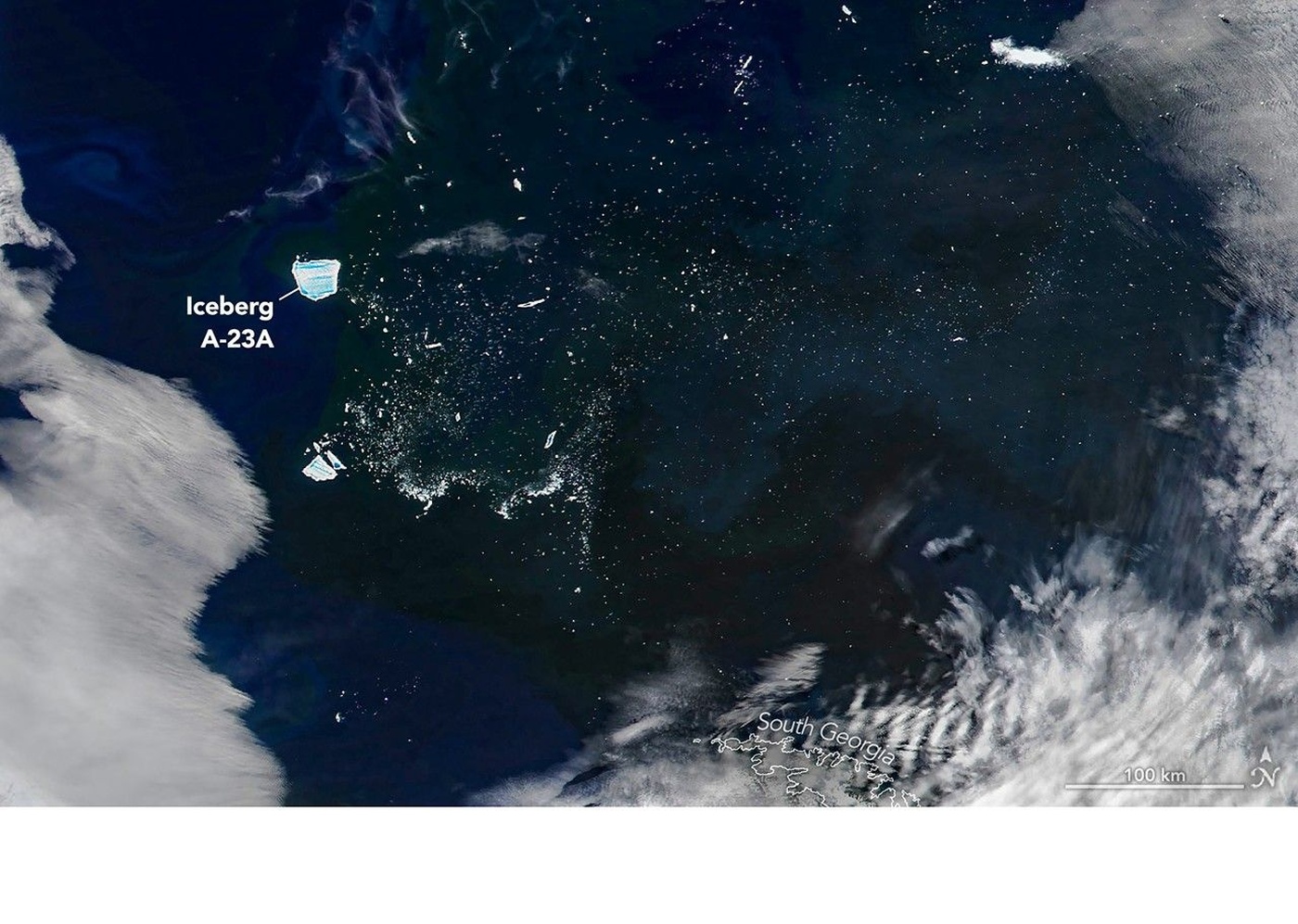
The recent breakup of Iceberg A-23A, once one of the largest in the world, has led to an unexpected ecological event in the South Atlantic Ocean. As the iceberg disintegrated, it released a significant amount of freshwater enriched with nutrients into the surrounding marine environment. This influx of meltwater served as a catalyst for an extensive bloom of phytoplankton, microscopic plants that form the base of the oceanic food web.
Scientists monitoring the region observed that the nutrient-rich meltwater created favorable conditions for phytoplankton proliferation, increasing biological productivity in an area that is typically nutrient-limited. This surge in microscopic life is crucial, as phytoplankton absorbs carbon dioxide during photosynthesis and supports diverse marine organisms, from tiny zooplankton to large whales.
Research teams utilized satellite imagery and oceanographic data to track the evolution of the bloom and assess its broader environmental impacts. The bloom’s occurrence highlights the interconnectedness between glacial dynamics and ocean ecosystems, particularly in polar and subpolar regions. Researchers emphasize that studying these processes can improve understanding of global carbon cycles and the consequences of climate change.
Although the growth of phytoplankton blooms can provide temporary boosts to marine food chains, scientists also warn about potential negative effects such as oxygen depletion in deeper waters if the bloom decomposes rapidly. Continued observation of iceberg melt events is deemed essential to better predict future ecological changes and to evaluate the feedback mechanisms involving polar ice loss and ocean health.