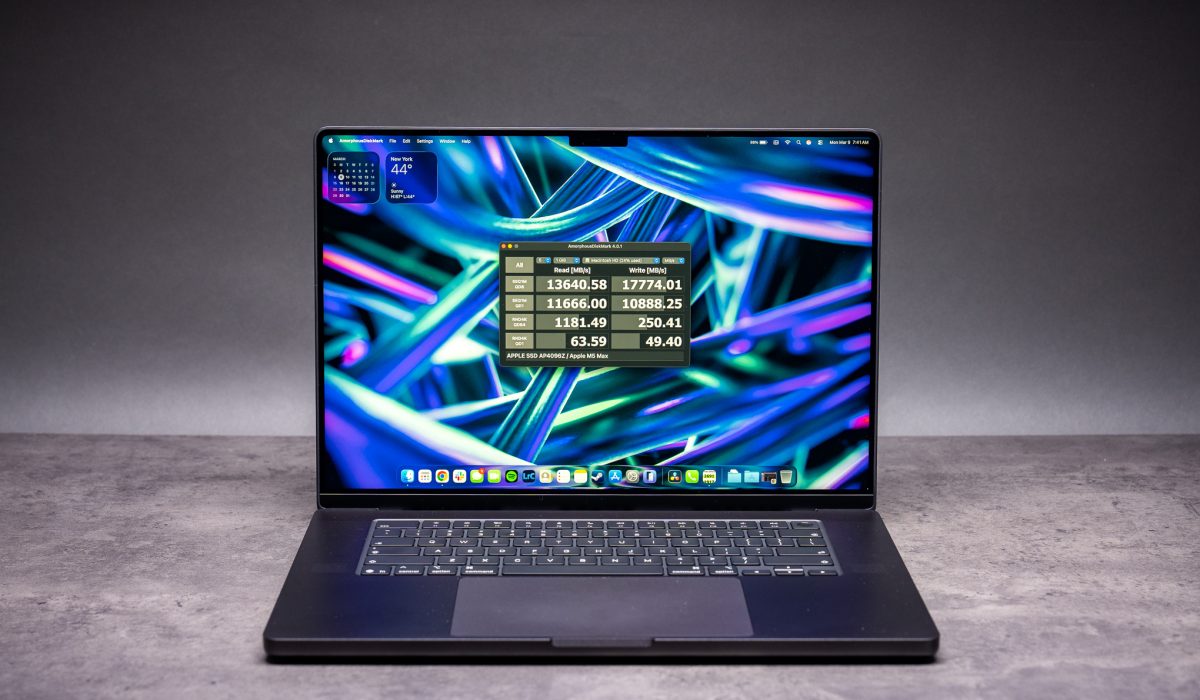
Apple has launched its latest generation of MacBooks featuring the M5 Max chip, marking the most significant performance improvements primarily for users upgrading from models that are three years old or more. While the physical design remains unchanged from previous years, the new lineup offers varying degrees of enhancement depending on the specific chip and model.
Overview of the M5 Max MacBook Models
Apple’s 2026 MacBook lineup includes a range of models from the entry-level M5 MacBook Air, starting at $1,099, to the high-end 16-inch MacBook Pro equipped with the M5 Max chip, priced at $6,149.
Despite retaining the same external design as the previous generation, the new MacBooks emphasize internal upgrades, particularly in processing power and efficiency, targeting professionals and enthusiasts seeking more robust computing capabilities.
Performance Improvements Compared to Previous Generations
Benchmarks show that the M5 Max chip delivers noticeable performance gains mostly when compared to MacBook models released three years ago or earlier. However, upgrades from the immediate past generation, such as the M4 chip, offer less dramatic differences in everyday usage.
This trend highlights Apple’s strategy of incremental advancements, focusing on power users who rely on intensive workflows like video editing, 3D rendering, and software development requiring sustained high performance.
Design Consistency and Functional Updates
Apple chose to maintain the same chassis and design elements from last year’s MacBook models, which means that the look, weight, and keyboard layout remain consistent.
Instead, the improvements are housed within the internal architecture, including updated thermal management and more efficient power usage, which may translate to slightly better battery life under certain workloads.
Implications for Potential Buyers
For customers considering an upgrade, the M5 Max MacBooks present the most compelling advantage for those using machines that are several years old, especially models without Apple silicon or with original M1 chips.
Conversely, users with last year’s M4-based MacBooks might find the performance bump insufficient to justify upgrading, unless specific professional needs demand the newer technology.
Market Position and Future Outlook
Apple’s M5 Max launch solidifies its approach of releasing incremental improvements with a focus on maximizing efficiency and performance for professional users.
Looking ahead, it is expected that Apple will continue refining these chips and possibly introduce more substantial design changes to their MacBooks in future updates to further distinguish new models in the highly competitive laptop market.