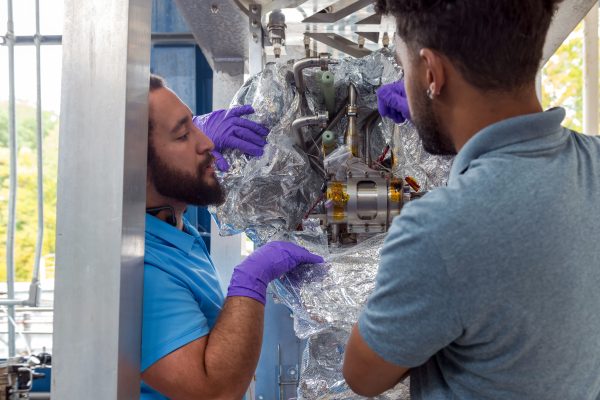

Lux Aeterna, a Colorado-based startup, has secured $10 million in funding to advance the development of fully reusable satellite technology. The company aims to revolutionize the space economy by deploying a fleet of satellites designed for multiple missions, reducing costs and environmental impact.
Lux Aeterna’s Vision for the Space Economy
Lux Aeterna’s goal is to transform how satellites are built, launched, and operated by focusing on reusability. Traditional satellites are often single-use, resulting in high costs and space debris. Lux Aeterna plans to develop satellites that can return to Earth, be refurbished, and redeployed for new missions.
This approach is expected to make space more accessible and sustainable, opening new opportunities for industries that rely on satellite data and services.
Innovations in Satellite Design
The startup is working on novel engineering solutions to enable satellite reusability. This includes advanced propulsion systems that allow controlled reentry and recovery, robust structural components that withstand multiple launches, and modular designs for easy refurbishment.
Such technology could significantly extend satellite lifespans and reduce the need for frequent replacements, which is a major cost driver in the space sector.
Funding and Growth Prospects
The recent $10 million funding round provides Lux Aeterna with crucial capital to accelerate research and development, expand its engineering team, and build prototypes for testing. Investors are increasingly interested in space startups that emphasize sustainability and cost efficiency.
This infusion of funds also positions Lux Aeterna to compete with established players and emerging companies aiming to innovate within the burgeoning space economy.
Implications for the Satellite Industry
If successful, Lux Aeterna’s reusable satellites could disrupt traditional satellite manufacturing and launch cycles. Lower costs and faster turnaround times may enable new applications, such as enhanced communications, earth observation, and scientific research.
Moreover, reducing space debris through reuse aligns with broader efforts to maintain a sustainable orbital environment for future missions.
Looking Ahead
As the space economy expands, technologies like those developed by Lux Aeterna will be crucial in enabling sustainable growth. The startup plans to conduct flight tests in the coming years as it advances toward commercial deployment.
By pioneering reusable satellite platforms, Lux Aeterna aims to play a key role in shaping the future of space infrastructure and services.