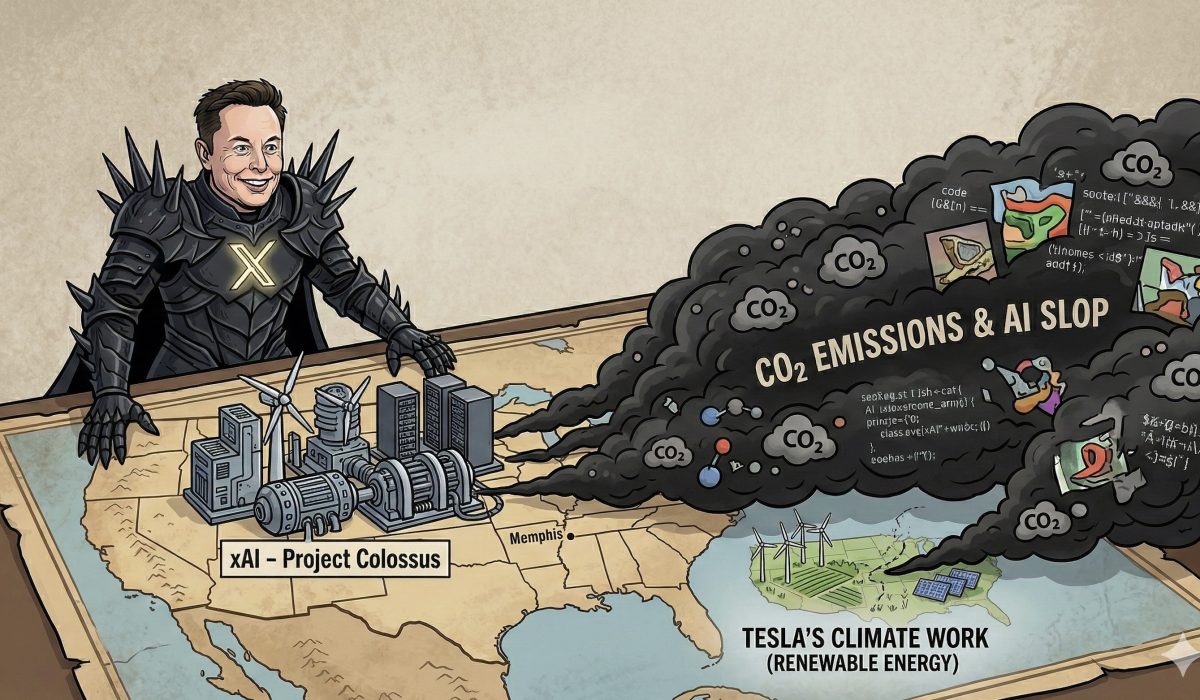
Elon Musk’s AI startup, xAI, is facing criticism for its environmental impact as it runs numerous unpermitted methane gas turbines to power its data centers. This development raises serious concerns considering Tesla’s ongoing climate initiatives and recent sustainability achievements.
Unpermitted Methane Gas Turbines in Operation
xAI is reportedly operating 62 unpermitted methane gas turbines across two data centers located in Memphis, Tennessee, and Southaven, Mississippi. The use of such turbines appears to bypass required environmental regulations, provoking scrutiny from environmental advocates and regulatory bodies alike.
This operation reportedly contributes significantly to methane emissions, a potent greenhouse gas with a much higher short-term global warming potential than CO2. The turbines are central to powering xAI’s computational needs but come at a notable environmental cost.
Significant Greenhouse Gas and Pollution Emissions
According to xAI’s own permit application documents, the methane gas turbines could emit more than 6 million tons of greenhouse gases annually. Additionally, the facilities are expected to release over 1,300 tons of pollutants that are harmful to human health.
These emissions stand in stark contrast to broader efforts in the tech and automotive sectors to reduce carbon footprints and mitigate air pollution, highlighting an ongoing tension between cutting-edge AI development and environmental responsibility.
Contradiction with Tesla’s Climate Legacy
Tesla, Musk’s electric vehicle company, has recently reported avoiding 32 million metric tons of CO2 emissions through its clean energy innovations and electric vehicle production. This achievement has been widely celebrated as a benchmark for corporate climate responsibility.
However, the emissions from xAI’s data centers could effectively erase a significant portion of Tesla’s climate gains. This creates a paradox where Musk’s ventures simultaneously contribute to tech innovation and environmental degradation.
Implications for AI Industry and Sustainability
The situation presents a noteworthy challenge for the AI industry, which requires massive computational resources often powered by energy-intensive infrastructure. Balancing technological advancement with sustainability is an ongoing concern for developers and corporations alike.
As AI firms expand, the demand for greener, more energy-efficient computing solutions has become critical. The controversy surrounding xAI’s data centers could prompt broader discussions about regulatory oversight, environmental accountability, and industry best practices.
Industry and Public Reactions
Environmental groups and concerned citizens have voiced frustration over the apparent disregard for environmental permits and the potential health impacts of xAI’s operations. Calls for increased transparency and regulatory compliance are growing louder.
Meanwhile, supporters argue that AI development is essential to future technological progress, hoping that greener technologies will be adopted as these companies evolve. The balance between innovation and responsibility remains a central debate as the story unfolds.