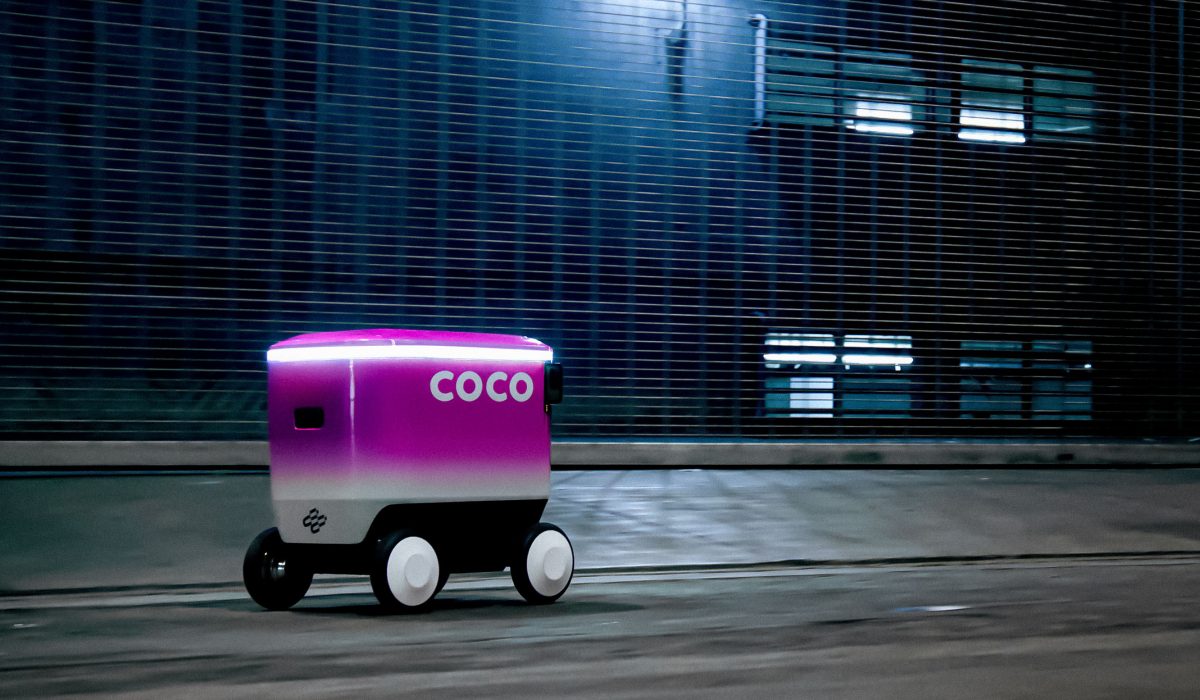
The augmented reality (AR) game Pokémon Go, which revolutionized mobile gaming since its 2016 launch, is now influencing the way delivery robots navigate urban environments. The mapping and geospatial technologies pioneered through the game are being adapted to give delivery robots a precise understanding of the world around them, improving efficiency and safety.
Origin of Pokémon Go’s Mapping Innovations
Pokémon Go was developed by Niantic, a company originally part of Google, and quickly became a global phenomenon. One of the key features of the game was its use of AR combined with real-world maps, creating an interactive experience that blended digital characters with physical surroundings.
Niantic’s technology relied on highly detailed, real-time environmental mapping that allowed the game to place virtual objects in specific, accurate locations. This approach created a framework for better spatial recognition and mapping that would later find applications beyond gaming.
Transition from Gaming to Robotics
Leveraging the data and mapping precision honed during the Pokémon Go era, researchers and engineers began integrating similar technologies into autonomous delivery robots. These robots require sophisticated spatial awareness to navigate complex cityscapes and avoid obstacles.
By incorporating AR-assisted mapping, delivery robots gain a more nuanced perception of their surroundings, enabling them to adjust their paths dynamically. This approach reduces errors in navigation and improves timely deliveries in urban settings.
Improving Environmental Perception for Robots
The core challenge for delivery robots is developing an “inch-perfect” view of the environment that allows them to recognize streets, curbs, curvilinear paths, and unexpected obstacles. Pokémon Go’s mapping algorithms provide a new level of precision in environmental modeling.
This enhanced perception is critical for mitigating risks associated with autonomous navigation, such as collisions with pedestrians or getting stuck in unpredictable urban terrain. Real-time updates borrowed from AR game technology also help robots adapt to changing conditions quickly.
Implications for Urban Logistics
With the growing demand for contactless and efficient delivery services, robots equipped with augmented reality-inspired navigation systems could significantly improve last-mile delivery solutions. Businesses stand to benefit through reduced delivery times and operational costs.
The integration of gaming-derived technologies into logistics marks a blending of entertainment and practical applications, demonstrating the versatility of AR innovations. This crossover highlights how advances in one sector can catalyze progress in another.
Future Prospects and Developments
Looking ahead, the collaboration between gaming companies and robotics developers is expected to deepen. Further enhancements might include richer environmental data collection and real-time AI analysis to optimize robot performance in varied urban landscapes.
As augmented reality continues to evolve, its potential to refine robotic navigation and autonomous systems promises to reshape how goods are delivered and how urban spaces are experienced by machines and humans alike.