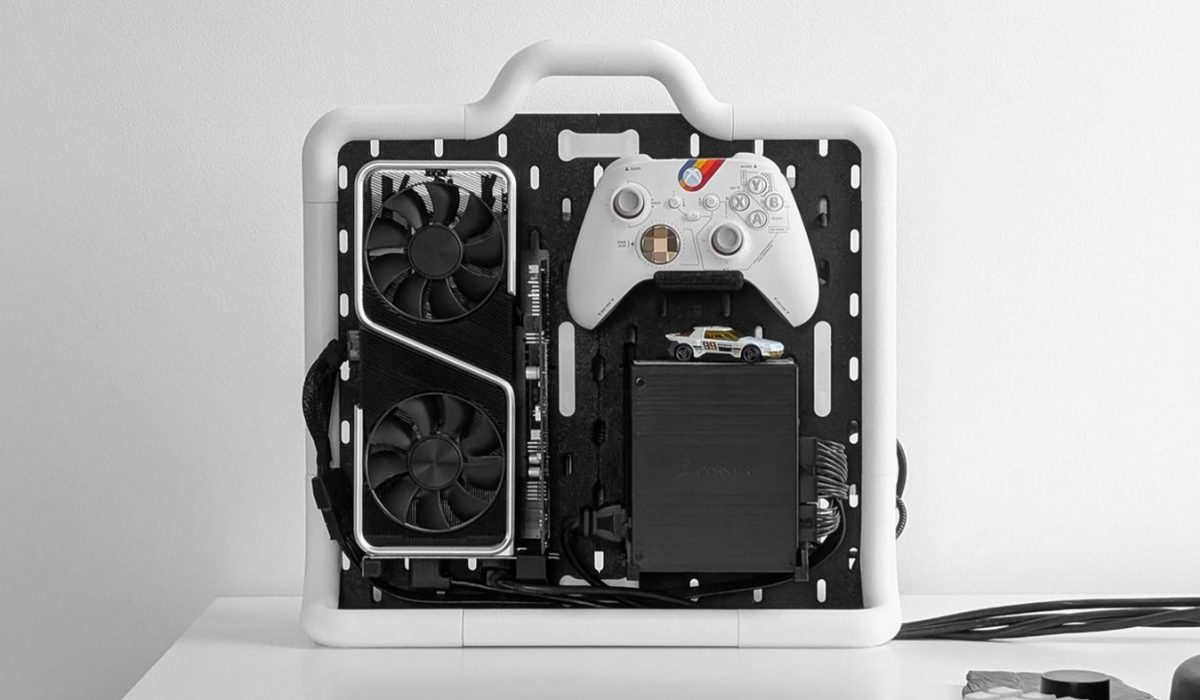


A new 3D-printed laptop carrying case has emerged as both an aesthetically pleasing and functional solution aimed at addressing the scarcity of external GPUs (eGPUs). This design seamlessly integrates portability and technological utility, providing laptop users with an enhanced way to transport and connect eGPUs.
Design and Aesthetics of the Suitcase
The carrying case is meticulously designed using 3D printing technology, allowing for a high degree of customization and precision in its construction. Its appearance resembles a traditional suitcase, lending a classic yet modern look that appeals to tech enthusiasts and professionals alike. While the case looks like a suitcase, users are advised not to treat it as one through rough handling due to its delicate components.
The use of various materials in its print enhances durability while keeping the case lightweight. The case also incorporates compartments specifically engineered to house laptops and eGPU components safely during transit.
Addressing the eGPU Availability Challenge
External GPUs have become a sought-after accessory for laptop users who require enhanced graphics performance without investing in heavier gaming laptops or desktops. However, eGPUs supply and compatibility issues have limited widespread adoption. This carrying case presents a portable and integrated approach to solving these problems by letting users transport and organize their GPU setups conveniently.
By combining effective storage and cooling solutions within the case, the design helps mitigate some hardware concerns such as overheating and damage, improving the practical usability of eGPUs on the go.
Technical Features and Functionality
The case includes features such as secure locking mechanisms, internal padding, and modular compartments that allow for easy assembly and access to both laptops and external GPU units. Its structure supports cable management to maintain an organized setup, preventing tangling or damage to cords during transportation.
Innovative cooling channels are built into the design to ensure adequate airflow around heated components, addressing a common problem in compact electronics storage solutions.
Potential Use Cases and User Benefits
This 3D-printed suitcase is particularly beneficial for professionals who rely on high-performance graphics, such as graphic designers, video editors, and gamers who prefer to use laptops but need desktop-level graphical power in different locations. The portability and protective design provide peace of mind when traveling with sensitive equipment.
Users can quickly set up high-powered computing environments anywhere without the bulk and fragility typically associated with carrying multiple devices and adapters.
Future Improvements and Market Implications
While currently a niche product mostly suitable for enthusiasts and early adopters, this innovation signals potential broader applications. Continued development could lead to enhanced durability, expanded compatibility with more devices, and possibly commercial availability targeting a wider market segment.
As 3D printing technology evolves, similar solutions might become more affordable and customizable, promoting greater flexibility in how users manage and transport computer hardware.