NASA is developing and testing innovative technology that allows spacecraft to be refueled directly on the surface of other planets or moons. This advancement aims to reduce mission costs and extend exploration durations by enabling landers to replenish their fuel supply without needing to carry all the required propellant from Earth.
Addressing the Fuel Challenge in Space Exploration
Spacecraft traveling to distant destinations face a fundamental challenge: carrying enough fuel for the trip significantly increases their weight, which in turn demands even more fuel to launch. This creates a cycle where the weight and cost of missions escalate rapidly with distance.
NASA’s CryoFILL (Cryogenic Fluid In-Situ Liquefaction for Landers) project seeks to break this cycle by developing technology that allows landers to refuel on-site. Such capability could greatly reduce the amount of fuel launched from Earth, enabling longer surface operations and more ambitious missions.
The CryoFILL Technology Overview
CryoFILL technology leverages cryogenic fluid handling advancements to capture and liquefy gases like oxygen on planetary surfaces, converting them into usable propellant. This process utilizes in-situ resources rather than relying solely on supplies brought from Earth.
The system involves cooling gaseous oxygen harvested from the environment to its liquid state, which can then be stored and pumped into lander fuel tanks. This liquefaction process is key to providing an efficient way to refuel landers in harsh extraterrestrial conditions where traditional refueling methods are impossible.
Testing at NASA’s Glenn Research Center
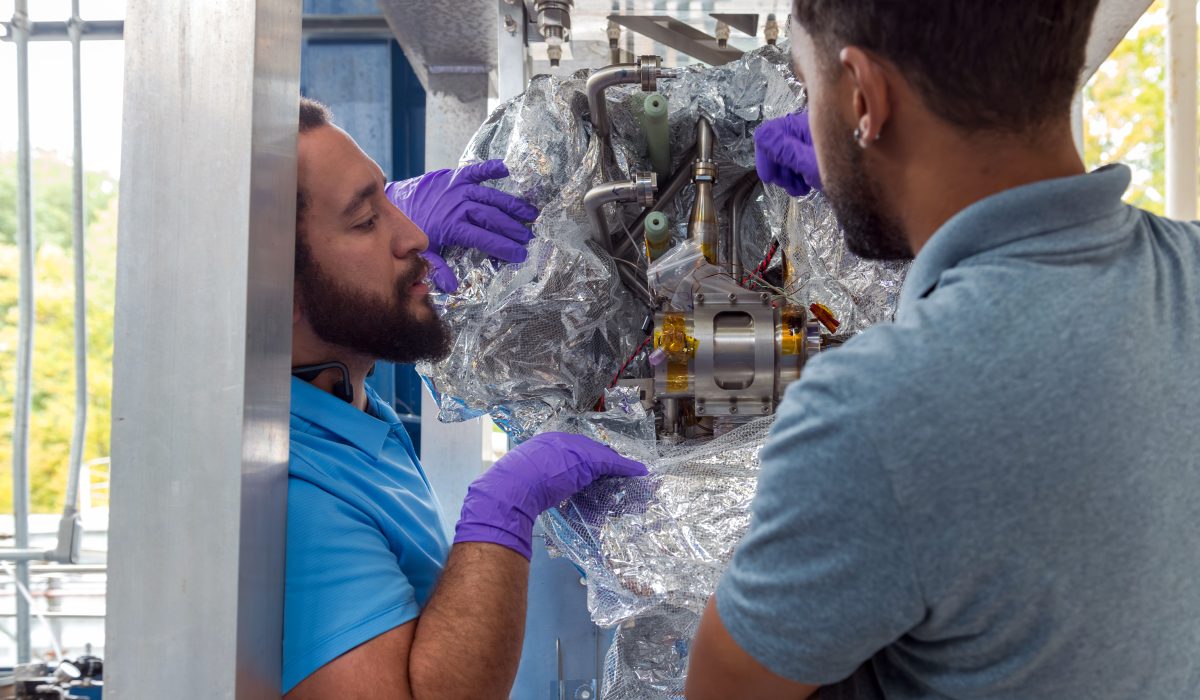
NASA’s Glenn Research Center in Cleveland is at the forefront of testing CryoFILL technology. Experiments simulate conditions expected on other planetary surfaces to validate the system’s reliability and efficiency in refueling landers.
These tests include managing extremely low temperatures and vacuum environments while ensuring that the cryogenic fluids remain stable and can be transferred safely. Achieving viable in-situ refueling under these conditions demonstrates the potential for future practical application.
Potential Impact on Future Missions
Implementing CryoFILL technology has the potential to revolutionize the logistics of space travel. By reducing the mass of fuel that must be launched from Earth, mission costs could decrease significantly, enabling more frequent or extended expeditions.
Furthermore, refueling on planetary surfaces could allow spacecraft to return to orbit or travel onward to other destinations without needing additional fuel from Earth, expanding the range and scope of exploration.
Next Steps and Outlook
Following successful testing, NASA plans to integrate CryoFILL hardware into future mission designs. Ongoing development aims to refine the technology for practical deployment, addressing challenges such as durability, scalability, and integration with existing spacecraft systems.
As space agencies worldwide look towards sustained exploration of the Moon, Mars, and beyond, technology like CryoFILL represents a critical innovation in making deep space missions more feasible and economically viable.