NASA’s Double Asteroid Redirection Test (DART) mission has successfully demonstrated its capability to change the orbit of a celestial object, with new observations revealing effects on both asteroids in a binary system rather than just the intended target. This unexpected outcome offers fresh insights into planetary defense strategies against potential asteroid threats.
Background of the DART Mission
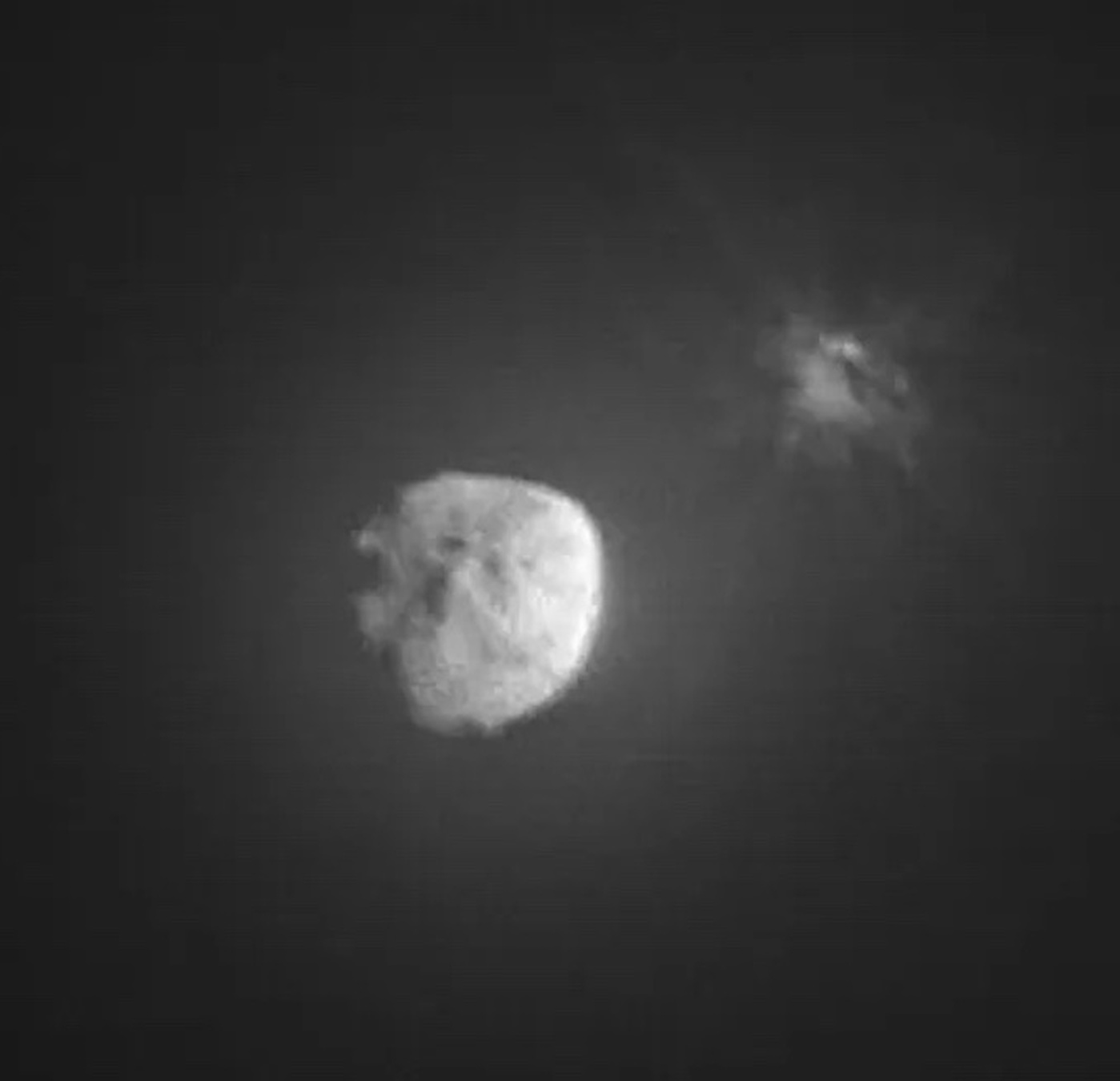
The DART mission was designed as a planetary defense initiative focused on testing kinetic impactor technology by deliberately colliding with the smaller body of the binary asteroid system, Dimorphos.
The primary goal was to slightly shift Dimorphos’s orbit around the larger asteroid Didymos to evaluate the viability of redirecting near-Earth objects if needed in the future to prevent potential impacts with Earth.
Impact on Both Asteroids in the Binary System
Post-collision observations have indicated that not only Dimorphos’s orbit shifted, but the primary asteroid Didymos experienced a change in its heliocentric orbit as well.
This phenomenon suggests complex gravitational interactions within the binary system caused by the impact that extended beyond the initial target, altering their shared trajectory around the Sun.
Scientific Significance of the Orbit Changes
Understanding the dynamics of the binary asteroid system post-impact is crucial for refining models predicting asteroid behavior after kinetic impacts. This knowledge improves risk assessments of potential asteroid deflection strategies.
Researchers emphasize the importance of studying the combined gravitational and momentum exchange in such binary systems to anticipate secondary effects on orbit trajectories after interventions like DART’s impact.
Implications for Future Planetary Defense Missions
The findings from DART highlight the need for comprehensive monitoring of entire asteroid systems when planning deflection missions, not just the immediate target bodies.
This broader approach could enhance the effectiveness and safety of future efforts to protect Earth from hazardous asteroids, ensuring that unexpected orbital shifts can be predicted and mitigated.
Continued Observations and Research
NASA and collaborating institutions continue to track the binary asteroids’ orbits closely using telescopes and radar measurements to better understand the long-term effects of the DART impact.
Ongoing data collection will support the design of improved asteroid deflection technologies and inform international planetary defense policies moving forward.