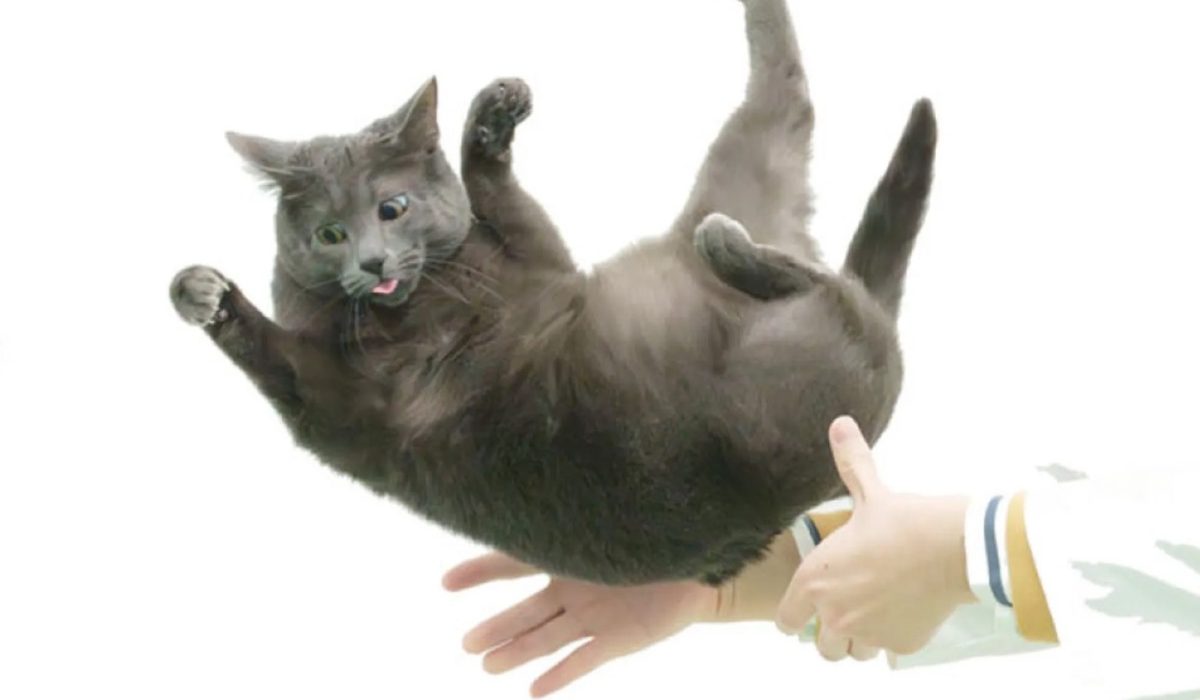
A recent study examining the biomechanics of cats in midair provides new insights into how these animals manage to land on their feet. The research focuses on the role of the flexibility of feline spines and reveals a surprising tendency for cats to turn to the right when falling.
The Falling Cat Problem Explained
The “falling cat problem” refers to the question of how cats are able to reorient themselves during a fall to land safely on their feet without violating the conservation of angular momentum. This conundrum has fascinated physicists and biologists alike for decades, as cats exhibit an exceptional ability to twist their bodies midair.
Previous theories suggested cats use a flexible spine to generate counter-rotations between their front and rear halves, allowing rotation despite zero net angular momentum. The new study builds upon this by measuring precise spine movements in free-falling cats.
Role of Spine Flexibility in Midair Maneuvering
The researchers used high-speed cameras and motion tracking to analyze the spinal curvature of falling cats. Their findings show that cats actively bend and twist their spines to create the necessary angular displacements to right themselves during a fall.
This spine bending allows the front and rear halves of the cat to rotate in opposite directions, enabling a faster and more efficient reorientation. The study confirms that the flexibility of the feline spine is a key anatomical adaptation for this remarkable ability.
Right-Turning Preference in Cats
Interestingly, the study also found that cats displayed a significant preference for turning to the right side when adjusting their posture mid-fall. This lateral bias may be related to neural control or muscular asymmetries in cats, although the exact cause remains under investigation.
The preference has implications for understanding how feline neuromuscular systems coordinate complex aerial maneuvers and may differ among individual cats or breeds.
Implications for Robotics and Biomechanics
Insights from this research may extend beyond biology into robotics, where flexible articulated bodies could mimic feline spinal mechanics to achieve agile midair orientation. Understanding these physical principles could enhance design strategies for rescue robots or drones operating in unpredictable environments.
The study bridges biology and engineering by highlighting how natural evolution has optimized spinal flexibility for rapid, controlled rotation without external forces.
Future Research Directions
Further studies are needed to explore the neurological basis of the right-turning preference and to quantify differences in spine flexibility among other species with similar abilities. Broader investigations could also examine juvenile versus adult cats to assess development influences on falling strategies.
Continued interdisciplinary research combining biomechanics, neurobiology, and robotics promises to unravel more details surrounding the remarkable falling cat phenomenon.