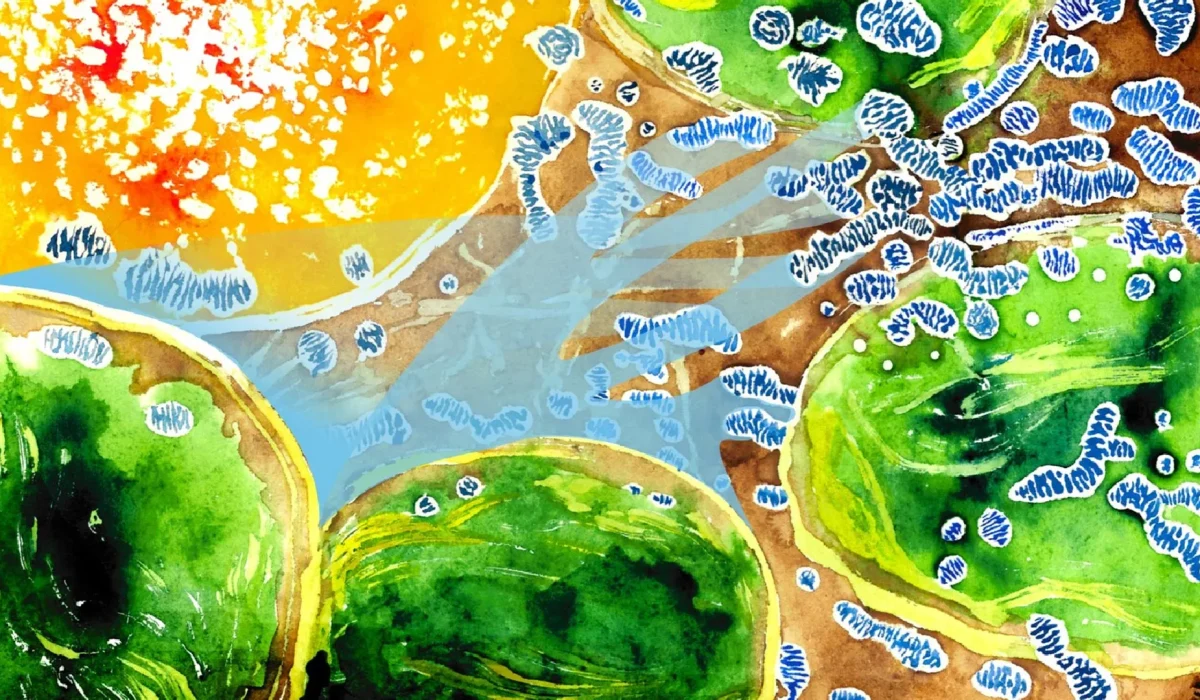
Recent research by the University of Helsinki has revealed a previously unknown interaction between mitochondria and chloroplasts in plant cells involving oxygen management. This discovery sheds new light on cellular processes that affect photosynthesis and plant stress responses.
Background on Cellular Oxygen Management in Plants
Plants rely on a delicate balance of oxygen within their cells for vital metabolic activities. Chloroplasts use sunlight to generate oxygen and sugars through photosynthesis, while mitochondria consume oxygen to produce energy in the form of ATP. Until now, these organelles were considered to have largely independent roles in oxygen dynamics within the cell.
The new study challenges this view by demonstrating active competition for oxygen between these two organelles, highlighting a complex interplay that influences cellular function.
Mitochondria Actively “Drain” Oxygen
Researchers discovered that mitochondria can actively pull oxygen away from chloroplasts under certain conditions, effectively creating an oxygen “tug of war” inside plant cells. This mechanism allows mitochondria to regulate the availability of oxygen, potentially affecting the photosynthetic activity of chloroplasts.
This active oxygen drainage by mitochondria adds a new layer to the understanding of intracellular oxygen management, suggesting that mitochondria play a more dynamic role beyond energy production.
Implications for Photosynthesis Efficiency
The competition for oxygen between mitochondria and chloroplasts may influence photosynthetic efficiency. Reduced oxygen availability in chloroplasts can impact the production of reactive oxygen species (ROS), which are known to be both damaging and signaling molecules during photosynthesis.
Understanding this oxygen regulation could lead to deeper insights into how plants optimize photosynthesis under varying environmental conditions, such as light intensity and oxygen availability.
Role in Plant Stress Responses
The production of reactive oxygen species (ROS) is critical for plants to respond to stress factors like drought or pathogen attacks. The new findings suggest that mitochondrial oxygen consumption affects ROS levels by modulating oxygen availability in chloroplasts.
This interaction between mitochondria and chloroplasts may provide plants with a refined way to balance growth and defense, by regulating oxidative signaling pathways essential for stress responses.
Future Directions in Plant Cell Research
The discovery opens up numerous avenues for further study on intracellular oxygen regulation. Scientists aim to explore how different environmental stresses influence the oxygen tug of war and identify molecular mechanisms controlling this interaction.
These insights could have applications in agriculture, such as breeding or engineering crops with optimized photosynthesis and stress tolerance traits.