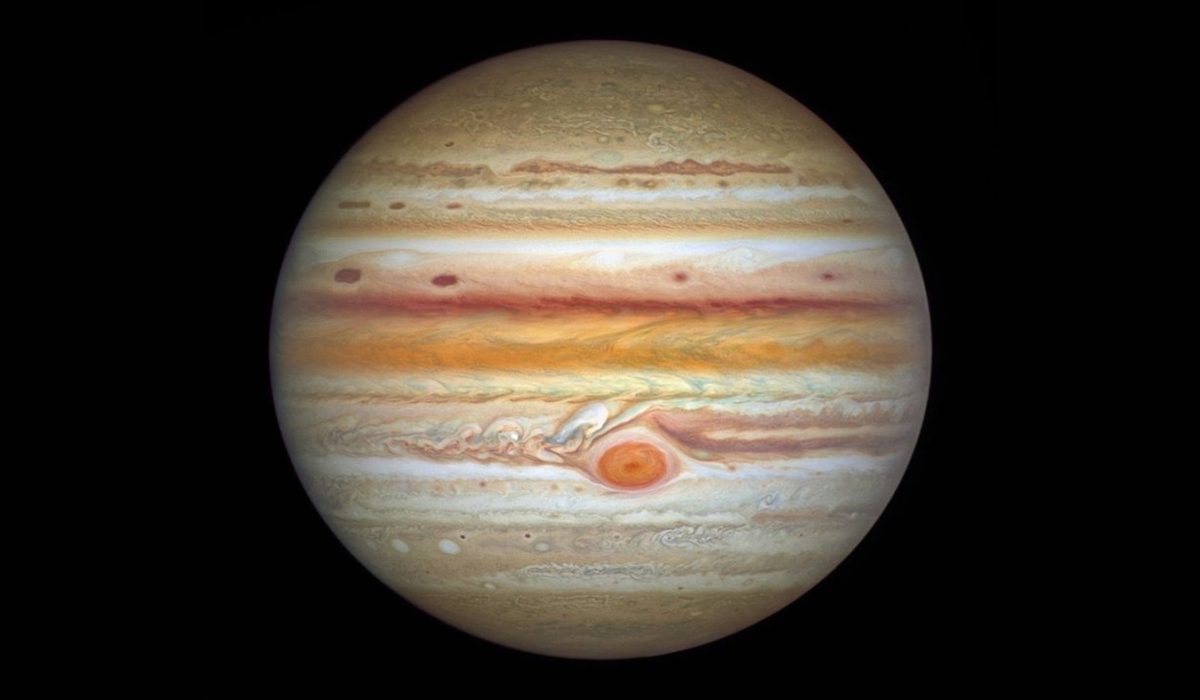
On the evening of March 10, observers will notice an unusual movement of Jupiter in the night sky. This apparent change in direction, known as retrograde motion, is a subtle astronomical phenomenon that takes place over multiple nights and offers insight into the orbital mechanics of planets within our solar system.
What is Retrograde Motion?
Retrograde motion refers to the apparent reversal of a planet’s usual east-to-west movement across the sky when viewed from Earth. Normally, planets progress steadily against the background stars in a consistent direction. However, during retrograde phases, they seem to slow, stop, and then move backward before resuming their forward motion.
This optical illusion is caused by the relative positions and motions of Earth and the planet in question, not an actual reversal of the planet’s orbit.
Why Does Jupiter Appear to Change Direction?
Jupiter’s apparent change in motion arises as Earth overtakes the giant planet in its faster orbit around the Sun. When Earth passes between Jupiter and the Sun, Jupiter appears to move westward temporarily against the background stars, rather than its usual eastward path.
This is similar to passing a slower car on a highway: the slower car appears to move backward relative to the faster-moving observer.
Timing and Duration of Retrograde
The retrograde motion of Jupiter unfolds over several weeks, with the transition around March 10 marking a key turning point. During this period, Jupiter’s position in the evening sky slowly reverses direction, creating a fascinating observational opportunity for astronomers and stargazers alike.
The full retrograde cycle lasts for a few months before Jupiter resumes its direct motion.
Historical Importance and Observational Significance
Understanding retrograde motion was pivotal in shaping our knowledge of the solar system. Early astronomers struggled to explain it within the geocentric model, leading to the development of the heliocentric theory by Copernicus.
Today, retrograde motion serves as a practical demonstration of planetary dynamics and helps astronomers refine orbital calculations.
How to Observe Jupiter’s Motion in the Sky
Jupiter is visible in the evening sky and can be tracked with binoculars or a telescope for detailed observation. Tracking Jupiter’s position nightly allows observers to detect the subtle changes in its apparent motion around the retrograde period.
Enthusiasts can use star charts or astronomy apps to follow Jupiter’s path and better understand this phenomenon as it unfolds.